

Beginning Your Nursing Career in the United States as a Foreign Nurse: A Comprehensive Guide
The United States healthcare system faces a critical nursing shortage, with projections indicating over 200,000 new nursing positions opening annually through the coming decade (U.S. Bureau of Labor Statistics, as cited in japahub.com.ng, 2025). This shortage has created unprecedented opportunities for internationally educated nurses (IENs) seeking to build rewarding careers in American healthcare. However, the journey from foreign-trained nurse to licensed U.S. registered nurse involves navigating a complex pathway of credential evaluations, examinations, immigration processes, and cultural adjustments.
This comprehensive guide illuminates each step of this transformative journey, providing you with the knowledge and resources to successfully begin your nursing career in the US.
Are you a Healthcare Administrator overwhelmed by the complex immigration timeline for international nurses?
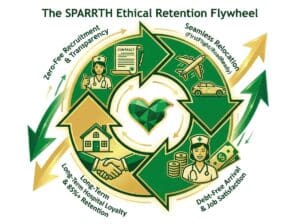
Stop navigating visas, credentialing, and international logistics alone. Discover how SPARRTH’s turnkey permanent Direct Hire solutions manage this entire 8-step process for your facility, delivering fully licensed, ready-to-work nurses directly to your units.
Understanding the Landscape for a Nursing Career in the US
The American nursing shortage stems from multiple converging factors: an aging nursing workforce approaching retirement, an increasingly elderly population requiring more healthcare services, and expanding healthcare access across the nation. States such as California, Texas, Florida, and New York experience particularly acute shortages, making these regions especially welcoming to international nurses.
International nurses comprise approximately 500,000 of the 3.5 million registered nurses currently employed in the United States, representing about 15 percent of the RN workforce. This substantial presence demonstrates not only the critical role foreign-educated nurses play in American healthcare but also the established pathways and support systems available for those embarking on this career transition.
Step 1: Meet Basic Eligibility Requirements
Before beginning the licensure process, you must ensure you meet fundamental qualifications. The U.S. healthcare system requires that internationally educated nurses possess credentials as first-level, general registered nurses as defined by the International Council of Nurses. This designation means you must have completed comprehensive nursing education covering multiple specialties rather than having trained exclusively in one specialized area.
Educational Prerequisites
Your nursing education must meet specific standards established by U.S. regulatory bodies:
- Completion of secondary school education separate from your nursing program
- Graduation from a government-approved nursing program lasting at least two years
- Theoretical instruction and clinical practice in medical-surgical nursing, maternal-infant care, pediatric nursing, and psychiatric/mental health nursing
- Current, unrestricted licensure as a first-level general nurse in your country of education
Most states prefer or require nurses to have completed a four-year Bachelor of Science in Nursing (BSN) degree, though associate degree programs may be acceptable in some jurisdictions. Additionally, having a minimum of two years of recent acute care hospital experience significantly strengthens your application and demonstrates clinical competency.
Step 2: Credential Evaluation—Validating Your Education
The credential evaluation process represents your first formal interaction with U.S. nursing regulatory systems. This critical step verifies that your international nursing education meets American standards.
Commission on Graduates of Foreign Nursing Schools (CGFNS)
CGFNS International serves as the primary credentialing organization for foreign-educated healthcare professionals seeking to work in the United States. For over 42 years, this immigration-neutral nonprofit organization has helped more than 3 million medical professionals from 189 countries validate their credentials for U.S. practice.
Credentials Evaluation Service (CES) Professional Report
Most state boards of nursing require the CES Professional Report, which provides a detailed analysis of nursing credentials earned outside the United States. This report validates and authenticates all licenses, registrations, and diplomas you have obtained and includes a statement of comparability of your nursing education assessed against U.S. nursing standards. The CES Professional Report is accepted by all 50 state nursing boards and is preferred by most.
To obtain your CES report, you must submit:
- Secondary school diploma or highest level of secondary education certificate
- Complete nursing education transcripts and course descriptions
- Documentation of current and previous nursing licenses
- Nursing degree diploma
- All documents translated into English by certified translators
The initial CES application costs $275 for one recipient, with processing typically completed within seven business days once all primary source documentation has been received and validated. However, gathering all required documents from source institutions in your home country may extend this timeline to several weeks or months.
Alternative: CGFNS Certification Program
Some states accept or require the CGFNS Certification Program, which includes three components: a credentials review, the CGFNS Qualifying Exam testing nursing knowledge, and an English language proficiency examination. The certification program costs $495 for the initial application. Upon successful completion, you receive a CGFNS Certificate valid for life, which serves as a predictor of your likelihood of passing the U.S. nursing licensure examination.
Contact your intended state’s Board of Nursing to determine which credential evaluation service they require, as requirements vary by jurisdiction.
Step 3: Demonstrate English Language Proficiency
Effective communication stands as a cornerstone of safe nursing practice. The National Council of State Boards of Nursing’s position statement emphasizes that “domestic and international nurses need to be proficient in written and spoken English skills”. Consequently, most states require internationally educated nurses to demonstrate English proficiency through standardized testing.
Accepted English Language Examinations
State boards of nursing accept several English proficiency tests, with score requirements varying by jurisdiction :
Test of English as a Foreign Language (TOEFL iBT): The National Council of State Boards of Nursing recommends a minimum overall score of 84 with a speaking subscore of at least 26. For example, Tennessee requires TOEFL iBT scores of 83 overall with 26 in speaking.
International English Language Testing System (IELTS Academic): Most states require an overall band score of 6.0 to 6.5, with a speaking score of 7.0.
Other accepted tests include:
- Occupational English Test (OET): Reading, Writing, and Listening scores of 200; Speaking score of 350
- Michigan English Test (MET): Overall and speaking scores of 55
- Pearson Test of English (PTE) Academic
English Language Exemptions
You may be exempt from English proficiency testing if your nursing education was completed in English as the language of instruction and textbooks in specific English-speaking countries. Exempt countries typically include:
- Australia
- Barbados
- Canada (except Quebec; specific institutions in Quebec such as McGill University may qualify)
- Ireland
- Jamaica
- New Zealand
- South Africa
- Trinidad and Tobago
- United Kingdom
- United States
Some states also waive English requirements if you completed secondary education in English or have practiced for at least one year in a majority English-speaking country.
Step 4: Apply to Your State Board of Nursing
Each of the 50 U.S. states maintains its own Board of Nursing with specific licensure requirements and application procedures. You must apply to the Board of Nursing in the state where you intend to practice.
Application Components
Typical state board applications require:
- Completed online application form
- Application fee ranging from $100 to $300
- Passport-style photograph (signed and dated)
- Credential evaluation report (CES or CGFNS Certificate)
- English proficiency test scores
- Criminal background check and fingerprinting
- Declaration of citizenship or immigration status documentation
- Current driver’s license or government-issued identification
Application processing times vary significantly by state, typically ranging from four to six weeks after the board receives a completed application with all supporting documents
Nursing Licensure Compact
Twenty-nine states currently participate in the Nurse Licensure Compact (NLC), which allows nurses to hold one multistate license with the privilege to practice in other compact states. To qualify for a compact license, you must meet additional requirements including having a valid U.S. Social Security number, establishing primary state of residence, and meeting enhanced background check standards.
Step 5: Pass the NCLEX-RN Examination
The National Council Licensure Examination for Registered Nurses (NCLEX-RN) serves as the definitive gateway to nursing practice in the United States. Every nurse, whether educated domestically or internationally, must pass this computer-adaptive examination to obtain licensure.
Understanding the NCLEX-RN
The NCLEX-RN tests your ability to apply nursing knowledge and make safe clinical decisions at the entry-level practice standard. The examination uses computer adaptive testing (CAT), which adjusts question difficulty based on your performance, requiring candidates to answer between 85 and 150 questions within a maximum time limit of five hours.
Exam Content Areas
The NCLEX-RN test plan organizes content into four major Client Needs categories with specific percentage distributions:
Safe and Effective Care Environment
- Management of Care: 18%
- Safety and Infection Control: 13%
- Health Promotion and Maintenance: 9%
- Psychosocial Integrity: 9%
Physiological Integrity
- Basic Care and Comfort: 9%
- Pharmacological and Parenteral Therapies: 16%
- Reduction of Risk Potential: 12%
- Physiological Adaptation: 14%
The examination integrates fundamental nursing concepts including caring, clinical judgment, communication and documentation, culture and spirituality, nursing process, and teaching/learning throughout all content areas.
Next Generation NCLEX
Beginning in April 2023, the NCLEX incorporates Next Generation (NGN) items designed to measure clinical judgment using the National Council of State Boards of Nursing Clinical Judgment Measurement Model. These innovative question formats include case studies, bow-tie items, trend items, and cloze (drop-down) questions requiring you to recognize cues, analyze information, prioritize hypotheses, generate solutions, take action, and evaluate outcomes.
Registration and Authorization to Test
Once your state board approves your application, you will receive an Authorization to Test (ATT) from Pearson VUE, the company that administers the NCLEX. The ATT remains valid for a specific period, typically 90 days, during which you must schedule and complete your examination.
The NCLEX examination fee is $200, paid directly to Pearson VUE. International candidates can take the NCLEX at testing centers in numerous countries worldwide or may choose to travel to the United States for examination.
Pass Rates for International Nurses
Understanding pass rate statistics helps set realistic expectations and emphasizes the importance of thorough preparation. Recent data from the National Council of State Boards of Nursing reveals significant differences between domestic and internationally educated candidates:
- First-time U.S.-educated candidates: 88.8% pass rate
- First-time internationally-educated candidates: 46.4% pass rate
- Repeat internationally-educated candidates: 29.9% pass rate
These statistics underscore the critical importance of comprehensive NCLEX preparation specifically tailored to international nurses. The lower pass rates for internationally educated nurses likely reflect differences in nursing education systems, testing formats, and English language proficiency challenges rather than clinical competence.
Preparation Resources
Numerous preparation courses specifically designed for international nurses can significantly improve your chances of first-time success (Kaplan Test Prep, 2020):
- Kaplan NCLEX-RN International Prep (self-paced, live online, or in-person formats)
- ATI Virtual-ATI International NCLEX-RN Review
- Archer Review NCLEX preparation
- North Shore College NCLEX Prep for Foreign Graduates
These programs typically include thousands of practice questions, content review libraries covering over 300 essential nursing topics, and specialized instruction on the Decision Tree method for approaching NCLEX questions. Many also offer international-specific resources such as CGFNS Qualifying Exam workshops and cultural adjustment guidance.
Step 6: Obtain VisaScreen Certificate for Immigration
While the VisaScreen certificate does not grant nursing licensure, it represents a mandatory federal requirement for foreign healthcare professionals seeking occupational visas to work in the United States.
Understanding VisaScreen Requirements
Section 343 of the Illegal Immigration Reform and Immigrant Responsibility Act of 1996 requires healthcare professionals (excluding physicians) to complete a federal screening program before receiving an occupational visa. The VisaScreen: Visa Credentials Assessment Service, administered by CGFNS International Commission on Healthcare Professions, fulfills this requirement by verifying:
- Educational credentials are comparable to U.S. standards
- All professional licenses are valid and unrestricted
- English language proficiency meets federal standards
- For registered nurses, successful completion of either the CGFNS Qualifying Exam or NCLEX-RN examination
The initial VisaScreen application costs $740, with certificates valid for five years and renewable for $475. Processing typically takes two to six months once all documentation has been received, though expedited 10-business-day review is available for an additional $650.
Alternative Credential Verification
Josef Silny & Associates offers an alternative Visa4Nurses certification with lower initial cost ($600) but slightly higher renewal fees ($500). However, this certificate is not accepted by all state boards of nursing, particularly in major states including California, New York, and North Carolina. For universal acceptance, the CGFNS VisaScreen remains the gold standard.
Step 7: Secure Employment and Visa Sponsorship
Obtaining employment and the corresponding visa sponsorship represents one of the most crucial steps in your journey to practice nursing in the United States. Unlike the licensure process, immigration involves complex legal procedures requiring employer participation.
Employment-Based Third Preference (EB-3) Visa
The EB-3 immigrant visa pathway represents the most common and appropriate route for staff-level registered nurses seeking permanent residency in the United States. This employment-based green card category specifically includes registered nurses as a “Schedule A” occupation—positions pre-certified by the Department of Labor as experiencing critical shortages where insufficient qualified U.S. workers are available.
Schedule A Designation Advantages
The Schedule A designation provides registered nurses with significant immigration advantages compared to other occupations:
- No labor certification required: Unlike most employment-based green cards, Schedule A positions bypass the lengthy PERM labor certification process that typically requires extensive recruitment efforts and can take 18 months or more
- Streamlined filing: Employers can file the uncertified PERM application simultaneously with the I-140 Immigrant Petition, significantly reducing processing time
- Predictable timeline: The EB-3 process for nurses typically takes 18 to 36 months from start to finish, depending on country of birth and visa bulletin movement
- Permanent residency: The EB-3 provides a direct pathway to a green card for both the nurse and eligible family members, unlike temporary visa options
To qualify for Schedule A processing, nurses must possess a full, unrestricted nursing license in the state where they intend to work and have either passed the NCLEX-RN or hold a CGFNS certificate.
H-1B Visa—Limited Applicability
While the H-1B temporary specialty occupation visa receives significant attention, it has extremely limited utility for staff-level registered nurses. The H-1B requires that positions mandate a bachelor’s degree as a minimum qualification, and since most U.S. hospitals require only an associate degree for staff RN positions, most bedside nursing roles do not qualify. Advanced practice nursing positions such as Nurse Practitioners, Clinical Nurse Specialists, or Nurse Anesthetists may qualify for H-1B status, but this pathway remains highly competitive with annual visa caps and a lottery system.
Salary Expectations
International nurses in the United States can expect competitive compensation that significantly exceeds earnings in most countries. Average annual salaries for foreign-trained nurses range from $70,000 to over $110,000, with the national average approximately $85,000 per year. Geographic location dramatically influences compensation:
- Entry-level RN positions in Midwest or Southern states: $68,000–$75,000
- Experienced ICU nurses in California or New York: $95,000–$120,000
- Additional earnings from overtime and shift differentials: $5,000–$10,000 annually
The median annual wage for all registered nurses in the United States was $93,600 in 2024, with hourly wages averaging $47.32. California leads the nation with average RN salaries of $148,330 annually, equivalent to approximately ₹1.23 Crore.
Step 8: Cultural Adaptation and Professional Integration
Successfully transitioning to nursing practice in the United States extends far beyond obtaining licensure and immigration status. Cultural adaptation, professional integration, and ongoing learning remain critical to long-term success and satisfaction in your new career.
Understanding Culture Shock and Acculturation
International nurses typically experience culture shock—the disorientation and stress that occurs when navigating unfamiliar cultural environments. Acculturation, the process of adapting to a new culture while maintaining your own identity, occurs in distinct phases:
- Cultural contact: Initial excitement mixed with confusion about new norms
- Cultural negotiation: Active comparison between home and host cultures, potential frustration
- Cultural adjustment: Developing comfort with new practices and integration into the community
Healthcare organizations increasingly recognize the importance of supporting international nurses through this transition. Many facilities offer specialized orientation programs, commonly called Transcultural Assimilation Programs (TAP), specifically designed for internationally educated nurses. These comprehensive programs typically include:
- Extended orientation periods (3–6 weeks beyond standard orientation)
- Cultural competency training covering American healthcare practices
- Communication skills development focusing on colloquialisms and assertiveness
- Education on electronic health records, medication administration systems, and documentation standards
- Mentorship pairing with experienced nurses
- Support with practical matters such as banking, housing, transportation, and social integration
Common Professional Challenges
Research identifies several consistent challenges internationally educated nurses encounter during their transition to U.S. practice:
Communication barriers: Understanding colloquialisms, medical abbreviations, and informal language used by colleagues and patients
Cultural differences in nursing practice: Variations in nurse autonomy, delegation practices, decision-making authority, and interprofessional relationships
Different healthcare systems: Adapting to U.S. insurance structures, legal frameworks, and patient rights perspectives
Racism and discrimination: Experiencing marginalization or microaggressions related to accent, ethnicity, or being perceived as an outsider
Developing strong support networks proves essential for navigating these challenges successfully. Connect with fellow international nurses, join professional nursing organizations, participate in community cultural events, and maintain open communication with managers and mentors about your adjustment needs.
Continuing Education Requirements
Maintaining your nursing license requires ongoing continuing education, with requirements varying significantly by state. Most states mandate 12 to 30 contact hours of continuing education every one to three years. Common state requirements include:
- California: 30 hours every 2 years (including implicit bias training)
- Texas: 20 hours every 2 years
- Florida: 24 hours every 2 years (including specific topics such as medical error prevention and human trafficking)
- New York: 3 hours of infection control every 4 years plus 2 hours child abuse recognition (one-time)
Several states including Alaska, Colorado, Connecticut, Indiana, Mississippi, Missouri, Montana, South Dakota, and Wisconsin do not mandate continuing education for license renewal, though maintaining competency through ongoing learning remains professionally essential.
Timeline Overview: From Foreign Nurse to U.S. Practice
Understanding the complete timeline helps set realistic expectations for this multi-year journey. While individual experiences vary based on numerous factors, a typical timeline follows this general pattern:
Months 1–3: Preparation and Initial Applications
- Research state requirements
- Begin credential evaluation process
- Take English proficiency examination
- Prepare for NCLEX
Months 4–6: Credential Evaluation and State Board Application
- Receive CES report
- Submit state board of nursing application
- Continue NCLEX preparation
- Research potential employers
Months 7–9: NCLEX and Employment Search
- Receive Authorization to Test
- Take and pass NCLEX-RN
- Actively pursue employment opportunities
- Begin VisaScreen application\
Months 10–12: VisaScreen and Visa Processing Begins
- Complete VisaScreen certificate
- Accept job offer with visa sponsorship
- Employer initiates visa petition process
Months 13–36: Immigration Processing
- Employer files I-140 petition (Schedule A)
- Wait for visa number availability
- Complete consular processing or adjustment of status
- Receive immigrant visa or green card
Month 36+: Arrival and Integration
- Travel to United States
- Complete transcultural orientation program
- Begin nursing practice
- Ongoing cultural adaptation
Total timeline from initial decision to practicing as a licensed RN in the United States typically ranges from 2 to 3 years, with variations based on individual circumstances, country of origin, visa bulletin movement, and processing backlogs.
For Healthcare Employers: Why You Need a Direct Hire Partner
As outlined above, the journey to bring an internationally educated nurse to the U.S. involves a complex, 8-step process spanning credentialing, federal exams, immigration law, and cultural assimilation. For most hospital HR departments, managing this pipeline internally is an administrative burden that drains resources.
That is where SPARRTH steps in. We are not a temporary staffing agency; we are your long-term Direct Hire partner. Through our proprietary programs like GreenLight (credentialing sponsorship) and FirstFlight (relocation and cultural assimilation), we absorb the administrative friction. We handle the pipeline so your clinical leaders can focus on patient care, ensuring you secure permanent, loyal nursing talent without the overhead of temporary contracts.
Conclusion: Embracing the Journey
Pursuing a nursing career in the US as an internationally educated nurse represents a significant investment of time, financial resources, and emotional energy. The pathway involves multiple complex steps: credential evaluation, English proficiency demonstration, state licensure application, NCLEX examination, VisaScreen certification, visa processing, and cultural adaptation. Each stage presents its own challenges and requirements, demanding persistence, preparation, and patience.
However, the rewards prove substantial. The United States offers internationally educated nurses competitive compensation, professional development opportunities, advanced healthcare technology, and the chance to contribute meaningfully to addressing critical healthcare workforce shortages. Your unique cultural perspective and international experience enrich American healthcare, bringing diverse approaches to patient care and enhancing cultural competency within healthcare teams.
Success in this journey requires thorough research, careful planning, comprehensive NCLEX preparation, and the willingness to embrace cultural adaptation. Utilize available resources including credentialing organizations, recruitment agencies, preparation courses, and professional support networks. Approach challenges with resilience and view setbacks as learning opportunities rather than insurmountable obstacles.
As you embark on this transformative career path, remember that hundreds of thousands of international nurses have successfully navigated this same journey before you. Their contributions to American healthcare prove invaluable, and the pathway, while complex, is well-established and achievable. With determination, preparation, and the right support, you too can realize your dream of building a rewarding nursing career in the US while making a profound difference in the lives of patients while making a profound difference in the lives of patients and communities.